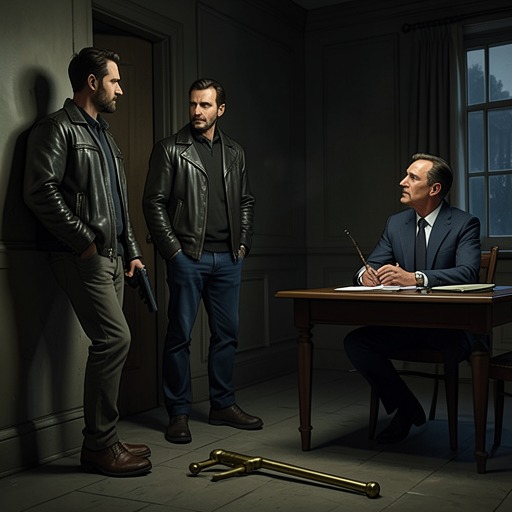
“Paint houses”
I Heard You Paint Houses“Paint houses” is a euphemism for killing, with the image of paint standing for blood splashed across a room. In the book, the phrase is more than a piece of mob slang: it is the first test of recognition between Jimmy Hoffa and Frank Sheeran, and the opening of Sheeran’s account of his work for Hoffa and Russell Bufalino.
Meaning and Image
The phrase’s literal image is domestic and almost ordinary; its meaning is lethal. Sheeran explains that to paint a house is to kill a man, and that the paint is blood left on the walls or floors by a shooting. The euphemism does not conceal the physical result so much as rename it, turning a killing into a task described through the language of housework.
The First Exchange
The phrase enters the story during a telephone introduction arranged by Russell Bufalino. Sheeran had told Bufalino that he wanted to enter union work; from a bar in South Philadelphia, Bufalino put him in contact with Jimmy Hoffa in Detroit. Hoffa’s first words to Sheeran were, “I heard you paint houses.” Sheeran answered, “I do my own carpentry work, too.” The book explains that the reply refers to making coffins and disposing of the bodies himself. The exchange therefore extends the code beyond the act of killing: “painting” names the shooting, while “carpentry” points to the body’s removal and burial.
Work, Title, and Stakes
After the call, Hoffa put Sheeran to work for the International Brotherhood of Teamsters, where Sheeran says he earned more than he had from his other jobs, including theft. He also handled matters for Hoffa on the side, as he had for Bufalino. The phrase thus marks the passage from Sheeran’s informal favors for Bufalino into paid union work and a closer association with Hoffa; the book’s opening encounter makes their shared coded vocabulary a sign of the violence underpinning that relationship.
The title “I Heard You Paint Houses” preserves the phrase in the form of Hoffa’s greeting. The book’s account later places that language against Sheeran’s confession, made to Charles Brandt over nearly five years of recorded interviews, that he had handled more than twenty-five mob hits, including work for his friend Hoffa. The euphemism’s plain, conversational sound sits beside the brutality it describes: a sentence that opens as an introduction carries the weight of the violence that defines Sheeran’s account.